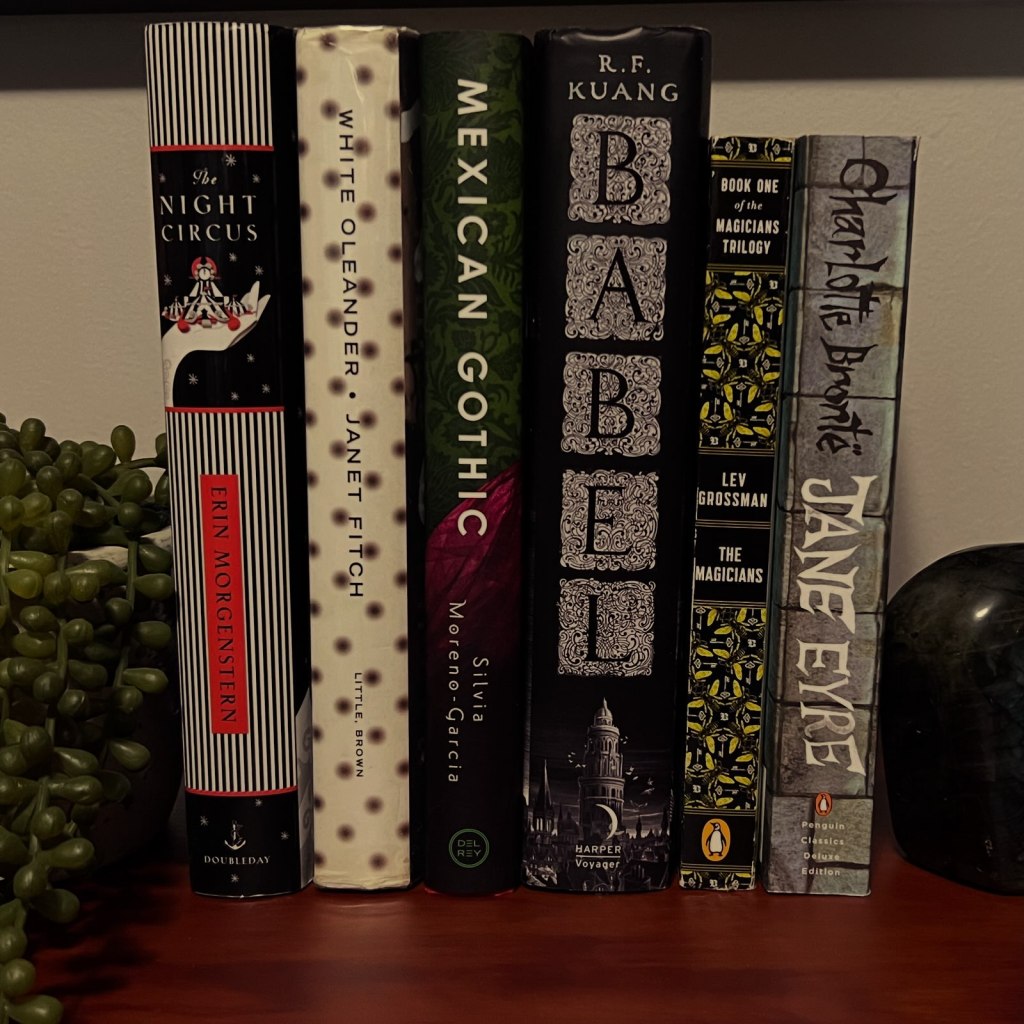
Before I ever dreamed of writing something worth reading, I fell in love with books, with characters, with sentences that felt like spells. I have always believed that great writing begins with deep reading. Not just wide reading, though that helps, but reading that lingers. Reading that haunts you a little. Reading that shapes how you see the world.
It feels right that my first post here honors the books that have stayed with me—not just as stories I enjoyed, but as works that helped form me. As a writer, yes. But also as a person.
Jane Eyre by Charlotte Brontë was the first book that truly possessed me. I was thirteen and picked it up on a whim, knowing little more than that it was “an old book.” Hours passed like minutes. I remember looking up and realizing it was long past midnight and I hadn’t once checked the time. The tragedy of Jane’s childhood, her fierce independence, the eerie tension of Thornfield Hall, and the complicated figure of Mr. Rochester. All of it swept me away. Jane’s strength wasn’t in grand gestures but in knowing her own mind. She was smart and clear-eyed and dignified in a way that made me want to be better. I still don’t know how Brontë made me root for a man who locked his wife in the attic, but she did.
The Night Circus by Erin Morgenstern is pure enchantment. A circus that appears without warning, rival magicians bound in an invisible war, a romance that unfolds like poetry. Morgenstern’s writing is lush and tactile; you can almost taste the caramel popcorn, hear the creak of the tent ropes, feel the crisp night air on your skin. I sometimes think about this book and tear up just wishing I could read it again for the first time. It’s a story that feels stitched together from dreams, and reading it reminded me that magic is possible on the page. I often think: if I could write something with even a fraction of its beauty, I’d never stop.
Babel by R. F. Kuang is the kind of novel that doesn’t just tell a story, it rearranges how you think. Through the lens of dark academia and speculative fiction, Kuang examines translation as a tool of empire, academia as a weapon of colonization, and language as both a prison and a key. It’s dense, sometimes reading like a linguistics textbook, but never dry. In fact, that academic texture is part of what makes it feel so urgent, so real. Babel cracked something open in me. It called me not just to write, but to question. To resist. To pay attention. I’m still grateful.
The Magicians by Lev Grossman pulled me out of a decade-long reading slump. I had forgotten that books could do this—surprise me, move me, make me feel seen and unsettled all at once. It’s a dark take on the magical school trope, but what struck me most were the deeply flawed characters. These weren’t heroes; they were lonely, angry, self-destructive people given impossible power. And still, I cared about them. The book showed me that speculative fiction could be literary, that magic could be just another way of talking about grief and longing and the aching hope that life might mean something. It gave me permission to write stories that sit in that in-between space where the fantastical and the real coexist.
White Oleander by Janet Fitch wrecked me in the best way. It’s the kind of book you devour even as it breaks your heart. Astrid’s journey through foster homes, abandonment, and survival is raw and painful. But the thing that hit me hardest was the complexity of her love for her mother—brilliant, cruel, magnetic, destructive. There’s something terrifying about loving a parent who hurts you. Something even more terrifying about admitting it. This novel captured that contradiction with beautiful, brutal clarity. I couldn’t look away.
Mexican Gothic by Silvia Moreno-Garcia was my gateway into horror—a genre I’d always avoided, partly because I’m a scaredy-cat and partly because I’d misunderstood it. This novel changed everything. Yes, it’s chilling. Yes, it’s weird and grotesque in all the best ways. But it’s also incisive and sharp, laying bare themes of colonialism, eugenics, and cultural erasure. And somehow it does all this without losing its gothic soul. Mexican Gothic taught me that horror can be a tool of truth-telling. That fear, when handled with care, can illuminate what history tries to bury.
These books aren’t just stories to me. They are signposts. Each one reminded me of the kind of writer I want to be: curious, daring, unafraid of beauty or honesty. They reminded me that writing isn’t always comfortable, and it shouldn’t be. It’s about staying with the hard questions. It’s about magic and meaning and maybe, if you’re lucky, making someone else feel seen.
So this is me, beginning. Starting with gratitude. And a stack of dog-eared books.
—Samantha
 Samantha Chapman
Leave a comment